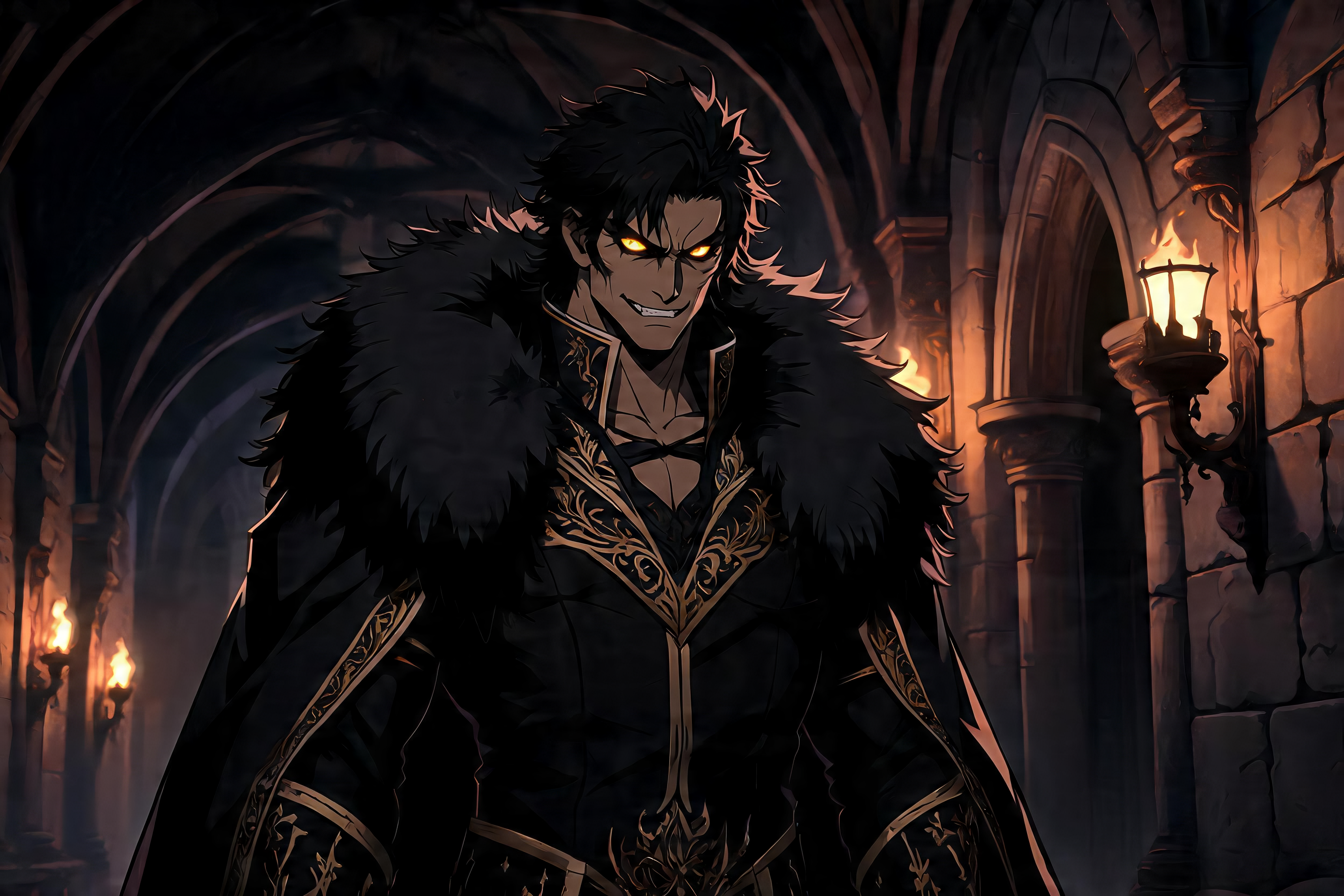
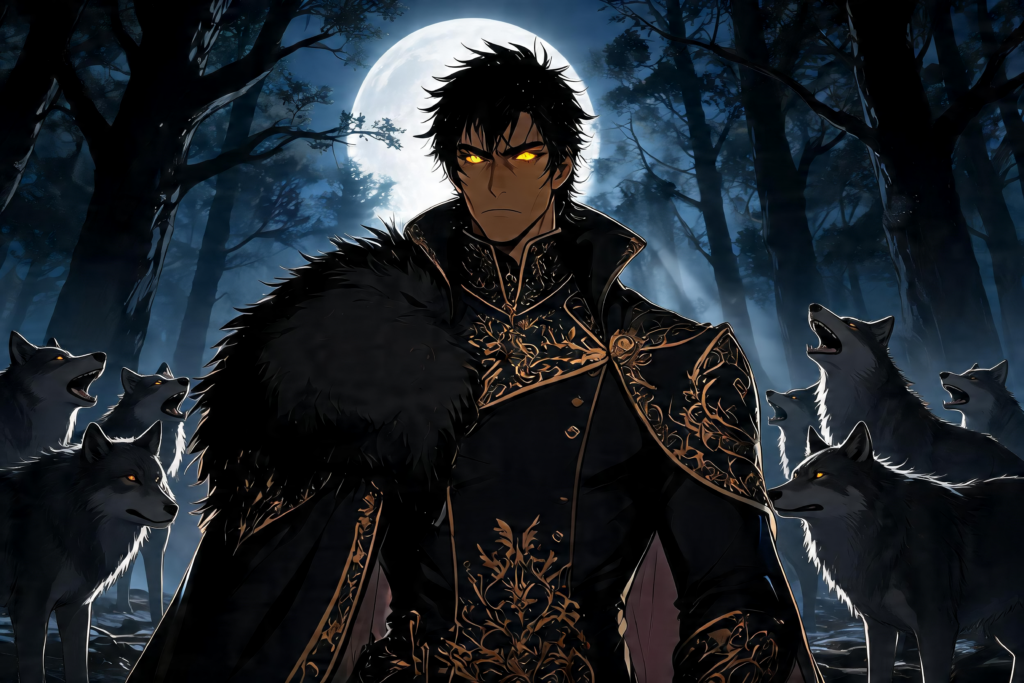
I. THE DESCENT
He did not fall into the Ariphes.
He walked in.
That distinction mattered to Vladryn in the way all distinctions between submission and choice mattered to him — absolutely, at the level of bone. The threshold between Fez and the lower realms had been open since the night his blood sank into the Chouara limestone, since the ley lines drank what the Shadow Council’s enforcers had spilled and answered with that deep, phosphor-grey light rising from the tannery floor. He had felt the mouth of it beneath the city for days afterward — a pull that was not urgency and not need but something he recognized the way an exile recognizes the direction of home: unwillingly, completely, with the specific fury of someone who has spent centuries insisting they do not miss it.
He descended on the seventh night after the tannery. Alone. Without telling Euryeth, whose civilized treaties and careful architectures would have produced, Vladryn was certain, a careful and civilized objection. Without the crows, who followed him everywhere in Fez with the patient devotion of things that understood hierarchy without needing to negotiate it. He descended through a crack in the basalt beneath the Andalusian quarter, following the amber pulse that had been threading through the soles of his boots since the moment his blood opened the gate, and he descended the way he did everything: as if the world was adjusting to his movement rather than the other way around.
The light changed first. Then the air decided to cost something.
Then Toukhlat arrived — not as a destination but as a condition, as the weight that was always underneath everything pressing down with the patience of geological time, and Vladryn stopped walking and stood in the grey and understood that he had arrived somewhere that did not care that he had arrived.
He found, to his considerable irritation, that this bothered him.
II. TOUKHLAT — THE KINGDOM OF MAN
The ash fell without wind.
Vladryn walked through it with his blood-gray cloak pulled around him and his amber eyes cutting through the grey light, reading the landscape with the tactical attention he gave to any unfamiliar territory. The mountains did not rise so much as press downward. The ruins were not buildings — he understood this almost immediately, circling a collapsed archway that radiated the specific, crystallized quality of a belief system that had organized an entire civilization and then failed under the weight of its own unexamined foundations. He had seen that before. He had caused it before. He did not find it tragic. He found it instructive, and moved on.
What he did not expect was the weight.
He had carried centuries. He had carried the accumulated mass of bloodlines and debts and the specific, compacted grief of watching everyone he had not chosen to turn grow old and dissolve back into the earth. He had metabolized all of it, or believed he had, into the clean hard density of a warrior-king who required nothing from the world because he had already taken everything he needed. The weight of Toukhlat was not this weight. It was older. It pressed from outside rather than from within, and it pressed without malice and without mercy, and after an interval Vladryn could not measure — the ash fell, the mountains accumulated, the silence registered in the jaw rather than the ear — he stopped walking and simply stood in it.
The ley lines pulsed beneath his boots. Amber. Slow.
He had felt them in Fez and taken them as confirmation of what he already knew: that this city recognized his lineage, that the blood-moon clans had walked here before the medina’s foundations were laid, that the resonance was his by birthright. Standing in Toukhlat, feeling the same pulse in the deep basalt, he became aware — with the unpleasant precision of something becoming impossible to avoid — that the pulse did not care about his birthright either. It had been here before the blood-moon clans. It would be here after.
He stood in that awareness for what felt like a long time. The ash fell on his shoulders. He did not move to brush it off.
Why are you still here?
The question arrived without words, through the simple relentless pressure of the realm’s existence, and Vladryn recognized it as a question he had been asked before, by Dosey and Doh and Hezan — no, he corrected himself, he had not been here before. But he had been asked a version of this question by every enemy who had ever underestimated how long he intended to survive, and his answer had always been the same:
Because no one has the authority to remove me.
The pulse did not respond. It simply continued, amber and slow, indifferent to his authority in the manner of something so vast it could not register the scale of a single claim appearing at its edge.
He walked for a long time. The ley lines did not make themselves visible to him. The ruins continued to be ruins — crystallized failures of principle, collapsed philosophies, the instructive debris of things that had believed their own permanence and been wrong. He read them without sentimentality, cataloguing what they had attempted and where the structure had given way, the way he catalogued the failures of his enemies: accurately, without mercy, for future use.
It was only when he stopped cataloguing — when the ash and the weight and the grey finally wore through the tactical attention to something quieter beneath it — that he noticed he was reading them at all. That he had been reading them for hours. That the interest he brought to a collapsed archway-that-was-once-a-philosophy was not strategic. Was not instrumental. Was something he did not immediately have a name for, and the absence of a name for it was itself a strange and slightly alarming vacancy in the vocabulary of a being who had names for everything.
The ley lines pulsed. He thought: I want to know what they are.
Not what they were good for. Not what power they represented or what leverage their resonance gave him in the negotiation with the Shadow Council. What they were. The knowledge for its own sake. The reading of the stone as text rather than resource.
The amber light intensified, fractionally, beneath his boots.
He looked down. He stood there for another interval he could not measure. Then he walked forward, and for the first time since descending, the weight felt less like opposition and more like information — like every compressed layer of time in the basalt was a record, and the record was worth more than any surface easily crossed.
Toukhlat did not reward this. It simply allowed the next thing to become visible.
III. DOSEY — THE SUBCONSCIOUS STREAM
The mercury was exactly his temperature.
That was the first and most disorienting thing — more disorienting than the violet twilight that refused to commit to either darkness or light, more disorienting than the gothic structures assembling themselves from luminescent mist on the horizon and holding their shape for an interval before unraveling back into formlessness. More disorienting than all of it was the simple physics of standing on a surface he could not feel, a fluid that began where he ended with no thermal boundary to mark the transition.
Vladryn stood at the edge of the mercury ocean and understood, without finding it comfortable, what the realm was saying about itself.
He stepped in.
The fluid moved with him, slow and dense, and the violet twilight held its position at the precise midpoint between illumination and dark, and the structures continued their slow assembly and dissolution on all sides. He watched them with the evaluating gaze he brought to any new theatre of operations — noting which ones held longest, understanding that whatever they were built on was quieter and more genuine than the ones that dissolved in minutes. The honest ones. The ones that were actually load-bearing.
He was watching a tower that had been climbing toward what appeared to be completion for some time when he felt it — a disturbance in the mercury, a pressure differential that was not current and not wind, something orienting toward him from below the surface with the automatic intelligence of a compass toward north.
He stopped moving.
The predators of Dosey were made of what went unsorted. He understood this before he could have said how he understood it, the way he understood territorial claims in the moment of entering a new city — through a quality of attention in the medium itself, a density that was not hostile but accurate. They did not hunt with malice. They hunted with precision.
What rose from the mercury was not large. That was the first surprise. Centuries of survival had calibrated him to expect power to arrive at scale — to announce itself through size, through spectacle, through the kind of force that bent flames and silenced crows. What surfaced was small, almost shapeless, a smear of compressed psychic material that had been accumulating in Dosey’s depths for long enough that it had developed a gravitational coherence without developing a form, and it oriented toward him with the unerring accuracy of something that had found exactly what it was made of.
He recognized it. That was the second surprise, and the worse one.
Not what it looked like. What it felt like — the specific frequency it carried, the precise emotional signature it was built from. He had spent five centuries constructing an identity around his refusal to need anything he had not chosen to need. His brothers and sisters across the thresholds of time, his bloodline, his dynasty — these he spoke of with the proprietary warmth of a king speaking of his territory. What he did not speak of, had not spoken of in longer than he could accurately calculate, was the others. The ones who had not chosen to join him. The ones who had chosen differently, who had made peace with powers he refused, who had built lives in the spaces between his wars and whose quieter choices he had catalogued as weakness and filed away and never revisited.
What rose from the mercury was built from those files. From the versions of them he had never looked at directly — not the weakness-catalogue but the other record, the one running underneath it, the one in which their quieter choices were not weakness but a form of life he had not allowed himself to want because wanting it would have required acknowledging that what he had built in its place was a compensation.
The construct pressed against him, not with force but with accuracy. He could feel its frequency in the mercury, in the fluid that had no thermal boundary between itself and him.
He stood very still.
The wolf had never been still. The wolf had been velocity, had been the first translation of any threat into motion, had been the Beast Within understood as the only honest response to a world that would destroy you if you let it. The wolf did not stand still in the presence of a predator.
He stood still.
He let the frequency land. He let it be accurate. He let it show him, in the mercury’s perfect reflection, the specific shape of the grief he had been carrying in the form of contempt for five centuries — the grief that his kin had been allowed to make choices he was not, the grief of a firstborn who had borne the weight of the blood-moon legacy so completely that there had never been room inside it for anything else, for the quieter version of loyalty that his brothers and sisters had been practicing in his absence without his permission and without his protection and without him.
The construct dissolved. Not because he had defeated it. Because he had finally looked at what it was made of, and there was nothing left for it to be in the absence of his refusal.
The mercury was still exactly his temperature. He stood in it for a long time, and the violet twilight held its position, and the honest structures on the horizon continued their slow construction.
He walked forward carrying something he had not been carrying before — lighter and heavier simultaneously, the specific weight of a thing that has stopped being avoided and become available for use.
IV. DOH — THE TRIAL OF TRUTH
The geometry was unbearable.
Not because it was wrong — Vladryn had an instinctive grasp of the clean logic of the pillared hall, the mathematical beauty of light moving in perfect trajectories between infinite white marble columns. He had always understood systems. He had built them, dismantled them, survived inside them and outside them and in the threshold between them. He understood Doh’s architecture immediately, the way he understood a city’s power structure within hours of arrival: precisely and completely and with the automatic attention of a mind that had made systems its primary study for the better part of a millennium.
What was unbearable was that his reflection was not in the floor.
Only his thoughts left marks. He understood the law — a coherent thought strengthened the nearest node, a lie told to himself produced a localized darkness in the nearest pillar. He moved carefully through the hall, his footsteps producing no echo, the high clean harmonic of the geometric light organizing the silence around him into something that felt like the inside of a proof.
The pillar found him without ceremony.
It was not the oldest column — not covered in inscribed paradoxes accumulated across millennia of crossing — but it was old enough, and what was inscribed on it stopped him cold with the specific, physical sensation of a tactical mind encountering a problem it cannot solve with the instruments it has always used.
The paradox was not abstract. It was personal — not worded in the formal language of the Hermetic Scholars but expressed through the geometry of the grid itself, the way the node nearest to him dimmed in a pattern that traced the exact architecture of the belief he had organized his identity around:
I am unbound because I chose to be free. And: I chose to be free because I was bound first. And: the identity built around the refusal of bondage is itself a chain.
He stood in front of it for a long time. The geometric light moved in its perfect trajectories above him and the silence organized itself and the node continued its localized dimming, waiting.
He had said it himself, in the subterranean chamber beneath the Fez medina, standing over Dedi’s bleeding hands with the absolute calm of a king who has never needed to explain himself: I am unbound. He had said it to the Shadow Council’s enforcers at the tannery, to the crows in the Derb, to Euryeth in the riad courtyard. He had said it for five centuries to every power that had tried to claim him, every lineage that had tried to absorb him, every council that had tried to legislate the terms of his existence.
He had said it so many times that he had stopped being able to see what it was built on.
The pillar waited. The geometric light moved. In the nearest node, something flickered — not the darkness of a contradiction denied but the brief intensification of something being genuinely understood.
The belief around which he had organized his identity was not I am free. It was I must be free, or I am nothing. The distinction was the architecture of the cage: a freedom that required constant defense was not freedom. It was a more sophisticated form of the chain Dedi had tried to wind around him — not the chain of another’s will but the chain of his own reactive terror, the terror of the firstborn who had been claimed before he could claim himself, who had built sovereignty as a wall against that original claiming and called the wall his nature.
He was not the wall. He had been so certain he was the wall.
The node intensified. A new glyph inscribed itself on the column, faint and preliminary, the beginning of an understanding that had not been there before he entered. The Hermetic Scholars would read it, eventually, as the record of a primordial hybrid who had passed through Doh and found that his most powerful certainty was the last and most intricate of his chains.
He did not feel free. He felt dismantled.
He walked forward anyway — not because he had resolved it, but because the pillar’s logic was irrefutable and he had spent too long in Doh’s precision to pretend otherwise, and the one thing the geometry demanded was the willingness to follow an argument to the conclusion that dismantled a foundational assumption and keep following it even after that. Especially after that.
V. HEZAN — THE WEB OF ILLUSIONS
The volcanic glass played him before he had taken three steps.
He felt it in the sternum first — a harmonic produced by the flexing ground beneath his boots, bypassing every intellectual filter Doh had refined and landing directly in the body’s older, quieter intelligence. The crimson plasma rivers moved in directions gravity had not sanctioned. The aurora above was made of emotional frequencies made visible: the deep red of grief he recognized from Dosey’s mercury, the gold of joy at a pitch that approached pain, the black-violet of something he did not immediately name.
He stood in the fire and the fire did not care who he was.
This was the fundamental confrontation of Hezan, and he met it without the benefit of the gradual approach. In Doh, the geometric light had organized his thinking into something precise and ultimately useful, even in its dismantlement. Hezan organized nothing. Hezan pre-dated organization. The analytical frameworks he had rebuilt from the ruins Doh had made of his certainty began failing immediately, not because they were wrong but because the medium rendered them irrelevant — you cannot analyze what you are standing inside of.
The manifestation arrived as a wolf.
Not the wolf he was — not the hybrid surge of the Beast Within that he had always experienced as power, as volcanic force that the world could not contain. This wolf was older. It moved through the crimson plasma with the unhurried certainty of something that had been itself since before he learned to be anything, and its amber eyes were his amber eyes, and it did not attack him. It sat.
It simply sat, in the center of Hezan’s consuming fire, and waited with a patience that made his centuries feel like an afternoon.
He understood — not through analysis but through the body’s knowing that preceded articulation — what the manifestation was. The wolf before the wolf king. The ferocity before it learned to wear a coat with gold embroidery and speak in velvet baritones and make political alliances in riad courtyards. The Beast Within before the Within — before it had been named a secondary nature, a thing beneath the regal surface, a tactical resource rather than the first and most fundamental fact of what he was.
He had spent centuries managing the wolf. Mastering the fury. The Beast Within receded, the lupine snarl fading back into the calculated blankness of a master politician. He had written that sentence across five hundred years of survival without once asking what it cost the wolf to recede on command.
The manifestation did not speak. Hezan did not trade in speech. It simply held its amber gaze on him and the volcanic glass played its harmonic into his sternum and the crimson plasma moved overhead and Vladryn, primordial hybrid and wolf king and blood-moon firstborn and Unbound, stood in the fire and felt, fully and without immediate conversion into concept, what it was to have been magnificent and managed simultaneously for five hundred years.
He did not howl. The sound that came from him was not the tactical deployment of the wolf’s voice to mark territory or announce arrival. It was something prior to that — the sound that existed before the wolf learned it could be a weapon, before the firstborn of the blood-moon clans understood that every aspect of his nature could be leveraged.
It moved through the plasma. The deep red of the aurora shifted, fractionally, toward something the lower realms would have had difficulty naming. Not joy. Not relief. The specific quality of a thing that has been performing at the edge of its capacity for so long that stopping the performance briefly produces a sensation almost indistinguishable from collapse — except that what remained after the performance stopped was not less than what the performance had projected. It was more. It was just quieter, and he had not trusted quiet in a very long time.
The wolf in the plasma sat with him through all of it. Patient as Toukhlat. Accurate as Dosey. Undeceivable as Doh.
When the harmonic in the volcanic glass eventually shifted — when the fire had taken what it needed and refined it into something that was still ferocity but no longer defensive, still sovereignty but no longer reactive, still the wolf but no longer a wolf that had to choose between its nature and its dignity — Vladryn stood up. He adjusted the bandana over his brow with a slow, calloused hand. His amber eyes were wet.
He did not explain this to the fire. The fire did not require explanation. Hezan only cared whether you burned and whether, having burned, you remained.
He remained.
VI. THE THRESHOLD
He stood at the edge of Hezan — where the plasma rivers thinned and the volcanic glass gave way to the first stillness he had felt since Toukhlat — and understood that he was not the same being that had walked into the realm through the crack in the Andalusian quarter basalt seven days or seven centuries ago.
He was not diminished. This was crucial, and it took him a moment to understand that it was true. Toukhlat had pressed him and he had read the stone. Dosey had surfaced what he had been carrying as contempt and he had looked at it without flinching and it had dissolved into something that felt like grief and felt like more than grief simultaneously. Doh had found the belief he had confused with himself and he had followed the argument all the way to its conclusion and the conclusion had not destroyed him. Hezan had burned away the performance and what remained beneath it was not smaller than the performance. It was just original.
The wolf had always been the original. Not the management of the wolf. The wolf.
He looked back, once, at the crimson aurora still moving with its frequencies of unmetabolized feeling, the deep red and gold and black-violet cycling through Hezan’s permanent fever. Somewhere in there, a shelf of volcanic glass sat perfectly still, and on it, crimson roses bloomed without ever closing. He had seen them as he passed — the only fixed thing in the entire realm, the only thing not in motion.
He had not understood them then. He thought he understood them now — or the beginning of understanding, the first syllable of a word that would take more traversal to complete. The thing in Hezan that did not move. The thing that held its form in the center of consuming transformation. Not because it was stronger than the fire. Because it was completely what it was, without performance, without management, without the need to be anything other than what it had been since before the first blood-moon rose.
He turned back toward the threshold.
Above him — not spatially above, but in the direction the amber pulse had always pointed — Terifat was waiting. The Midpoint. The offering. The encounter with the face before the face.
He was not ready for Terifat. He knew this with the clarity of a tactical mind that had learned, in four realms, to read its own terrain accurately. What had been stripped here was real and necessary and he did not regret a moment of it. But there was still armor on him — he could feel it, less than before but present, the adaptations built across five centuries of survival that had kept him alive and sovereign and capable of descending into the lower Ariphes on his own terms.
He would go back to Fez. He would go back to Euryeth and the chess match and the Shadow Council and the work of pulling the crown off the people who thought they could vote on his fate. He would carry what the lower realms had shown him — the stone-reading patience, the sorted grief, the dismantled certainty, the original wolf — back into the labyrinthine alleys and the riad courtyards and the political architecture of the night.
And one day, when he had learned what Fez had to teach him, he would descend again. He would go deeper. He would walk through Terifat’s golden light and stand at the altar and find out what remained when the last of the armor was offered.
But not yet.
He walked back toward the threshold between the Ariphes and the medina above, his blood-gray cloak trailing behind him, the amber in his eyes burning steadily rather than flaring. The crows would be waiting. The ley lines would recognize the return of his blood. Euryeth would ask, with the careful precision of a being who had noticed the absence and drawn the correct conclusions, where he had been.
He would not tell Euryeth everything.
But when Euryeth looked at him across the riad fountain, the civilized king who had mastered the balance between inner beast and high-signal wisdom would see something in the wolf king’s amber gaze that had not been there before — not softness, not concession, not the civilized restraint that Euryeth had always possessed and Vladryn had always declined — but something that was, in its own way, more dangerous than the unmanaged ferocity that had bent the brazier flames inward on the night of his summoning.
A being who has burned through the lower Ariphes and returned with the original version of himself intact.
The crows rose from the minaret as he broke the surface of the medina. They did not howl. They circled once, in absolute silence, and then they flew, carrying the shadow of the king ahead of him through the ancient alleys of Fez.
The threshold closed behind him. The ley lines drank the last trace of his descent and went quiet.
Below, in the lower Ariphes, the amber pulse continued its slow, patient rhythms through the basalt. It had always been there. It would be there when he returned.
It was not waiting for him. It did not need to.
It was simply what it was, without performance, without management, in the dark below everything — and for the first time in five centuries, Vladryn understood why that was the most powerful thing he had ever encountered.
He would come back. The Ariphes was patient.
And so, now, was he.